Sale!

Social Engineering Kavach – Social Engineering & Scam Awareness Guide | Phishing, Vishing & Online Fraud eBook

Original price was: ₹199.00.Current price is: ₹99.00.

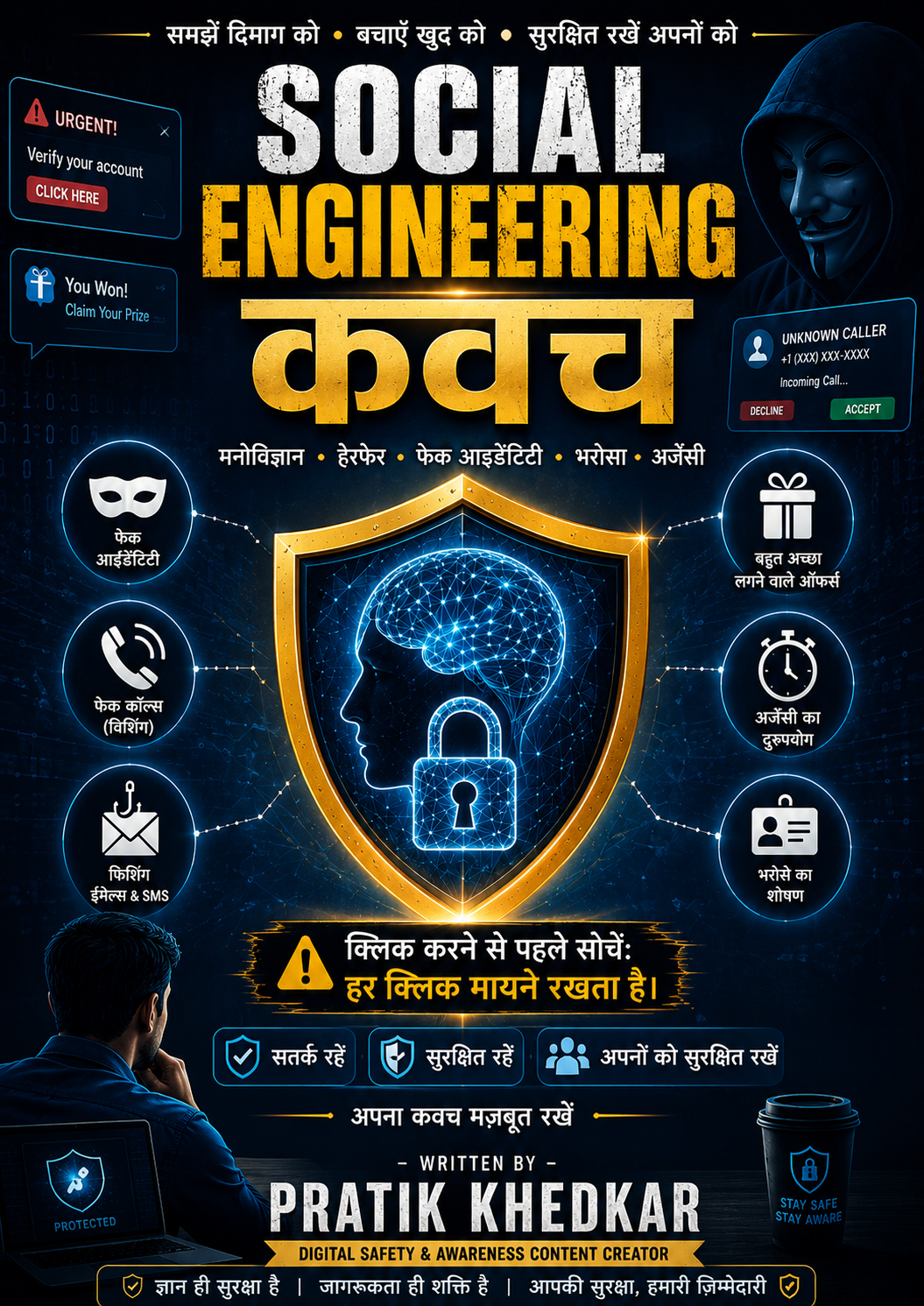
Social Engineering Kavach is a practical Social Engineering & Scam Awareness Guide designed to help users understand how scammers exploit psychology, trust, urgency, fake identities, phone calls, emails, messages and attractive offers to manipulate people.

Learn how to recognize phishing, vishing, fake identity scams, urgent requests, fake offers, trust-based manipulation and other social engineering techniques before taking action.

Think Before You Click: Every Click Counts.

Psychology-Based Scam Awareness • Real-World Examples • Practical Digital Safety Habits
Description

Social Engineering Kavach – Social Engineering & Scam Awareness Guide

How Scammers Manipulate Your Mind

Technology is not always the weakest link in a digital scam — sometimes human psychology is.

Scammers may use trust, fear, urgency, curiosity, authority, attractive offers or fake identities to influence people into clicking a link, sharing information, approving a request or making a payment.

Social Engineering Kavach is a practical awareness guide that explains how these manipulation techniques work and how users can recognize suspicious situations before responding.

The guide focuses on an important digital-safety principle:

Understand the Manipulation → Pause → Verify → Then Act


🧠 What Is Social Engineering?

Social engineering refers to manipulation techniques used to influence people into taking an action that may compromise their information, accounts, privacy or money.

Instead of directly attacking technology, scammers may first try to manipulate the person using it.

Common psychological triggers can include:

  • Trust
  • Fear
  • Urgency
  • Curiosity
  • Authority
  • Greed or attractive offers
  • Familiarity
  • Emotional pressure

Understanding these patterns can help users become more cautious when dealing with unexpected digital communication.

📖 What You Will Learn

1. The Psychology Behind Scams

Understand why people can sometimes make quick decisions under pressure and how scammers attempt to exploit emotions and human behaviour.

2. Fake Identity & Impersonation

Learn how scammers may pretend to be someone you know, a company representative, an authority figure or another trusted person.

3. Phishing Emails & SMS

Understand how deceptive emails and messages can create urgency and encourage users to click suspicious links or provide sensitive information.

4. Vishing & Fake Calls

Learn how fraudulent phone calls can be used to create trust, fear or urgency and pressure users into taking immediate action.

5. Fake Offers & Too-Good-to-Be-True Deals

Understand how attractive prizes, discounts, rewards, jobs and other offers can be used as bait in scams.

6. The Power of Urgency

Why do scammers often use words such as URGENT, NOW, LAST CHANCE or IMMEDIATELY?

Learn how artificial urgency can reduce the time available for careful thinking and verification.

7. Trust Exploitation

Understand how scammers may use familiarity, authority, relationships or credibility to make suspicious requests appear legitimate.

8. Emotional Manipulation

Learn how fear, excitement, curiosity, sympathy and financial pressure can influence decision-making during a scam.

9. Recognizing Red Flags

Develop the ability to identify suspicious patterns before clicking a link, answering a call, sharing information or making a payment.

10. Think Before You Act

Build a simple decision-making habit:

STOP → THINK → VERIFY → ACT


🚨 Common Social Engineering Triggers

Social Engineering Kavach helps readers understand common manipulation triggers such as:

“Your account will be blocked.”

“You have won a prize.”

“Verify your account immediately.”

“Your KYC has expired.”

“This is an urgent request.”

“Click here to claim your reward.”

The objective is not to memorize every scam message, but to recognize the pattern of manipulation behind them.

🛡️ Your Social Engineering Kavach

Before responding to an unexpected message, call or offer, ask:

WHO is contacting me?

WHY are they contacting me?

WHAT are they asking me to do?

CAN I verify this independently?

WHAT happens if I act immediately?

Taking a few seconds to verify can help prevent an impulsive decision.


👥 Who Is This eBook For?

Social Engineering Kavach is useful for:

  • Students and young digital users
  • Parents and families
  • Senior citizens
  • Social media users
  • Online banking and payment users
  • Smartphone users
  • Employees and professionals
  • First-time internet users
  • Schools and educators
  • Digital safety awareness programs


🔐 Why Social Engineering Kavach?

Many digital scams begin with something that looks ordinary:

A message.
A phone call.
An email.
A notification.
An offer.
A request.

The real danger may be the manipulation behind the message.

Social Engineering Kavach helps readers develop the awareness needed to recognize suspicious behaviour and avoid making decisions under unnecessary pressure.

Don’t Trust the Message. Verify the Source.

Don’t Follow the Urgency. Verify First.

Don’t Let Emotions Make the Decision.


📌 eBook Highlights

  • 🧠 Social Engineering Awareness
  • 🎭 Fake Identity & Impersonation
  • 🎣 Phishing Awareness
  • ☎️ Vishing & Fake Call Awareness
  • 📩 Fake Email & SMS Scams
  • 🎁 Fake Offers & Reward Scams
  • ⚠️ Urgency-Based Manipulation
  • 🤝 Trust Exploitation
  • 🧠 Psychological Manipulation Awareness
  • 🚨 Scam Red Flags
  • 🛡️ Practical Digital Safety Habits
  • ✅ Think Before You Act Framework